
The Inherent Ambiguity of Existence: Mundaka Upanishad’s Poem, Two Birds
A cryptic poem puzzle about choosing different paths in life.
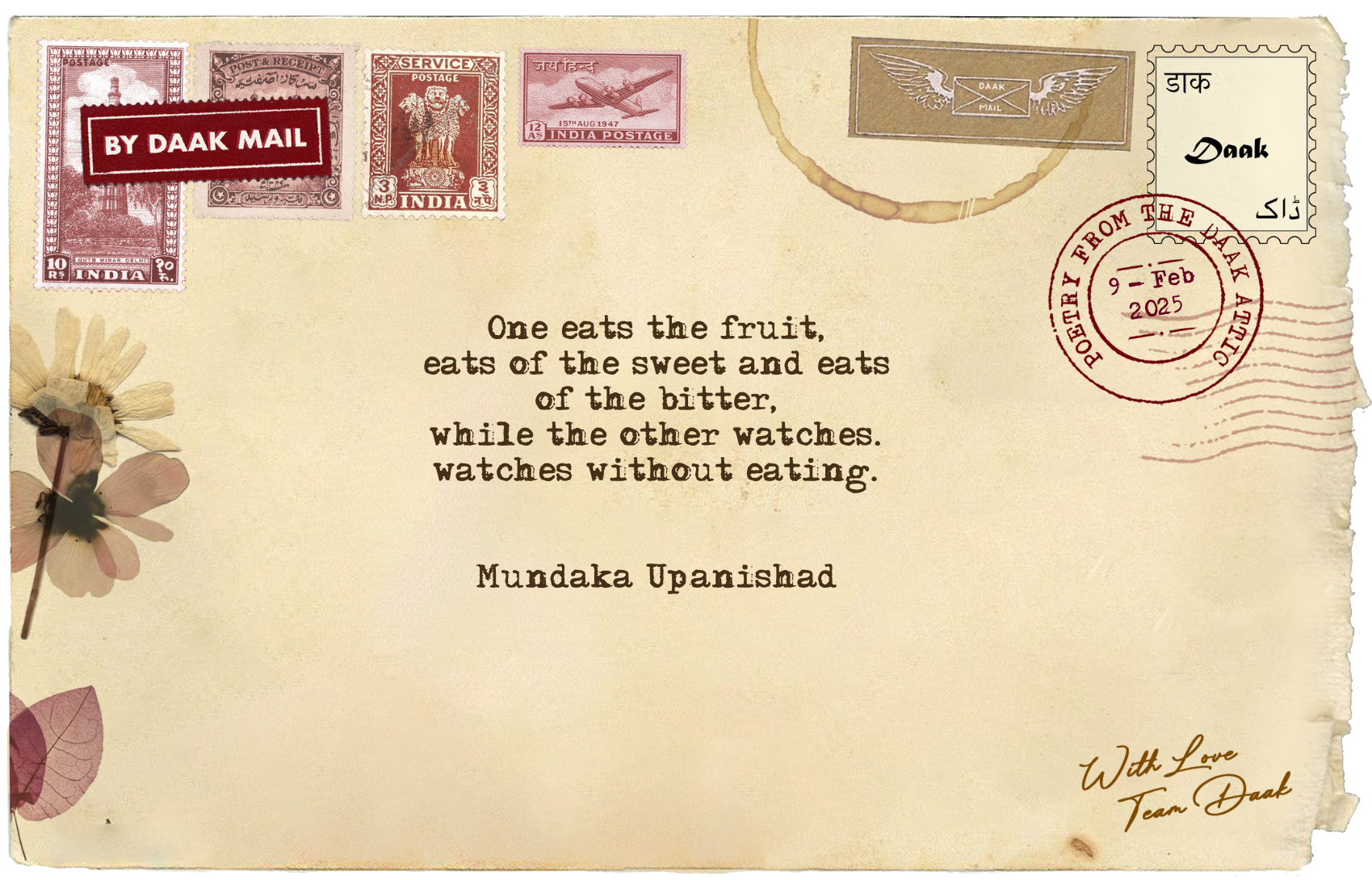
The Mundaka Upanishad’s primary claim to fame is the ubiquitous “Satyamev Jayte” – India’s national motto and an overused cliché in Indian television and cinema. However, the triumph of truth is a small drop in the vast ocean of wisdom contained in this Upanishad.
An ancient Sanskrit vedic text (the date and origin of which is contested), the Mundaka Upanishad is nestled within the larger Atharva Veda. Its teachings take the form of deceptively simple poems which dwell on the nature of existence and spirituality. While the language relies on simple composition and common metaphors, the central message in each poem is often ambiguous and multivalent.
In this cryptic poem “Two Birds,” translated by A. K. Ramanujan, we encounter the inherent ambiguity of existence – the thirst to experience life completely and the vague, nagging impulse to detach from worldly pleasures. Two birds reside in the same tree – perhaps a metaphor for the body – and choose completely different paths, one of indulgence and the other of detachment. And yet, the one who takes wilful action or “eats the fruit” is the one “engulfed in his impotence.”
Which one is trapped and which is free? Read the full poem and prepare to uncover its layers of meaning.
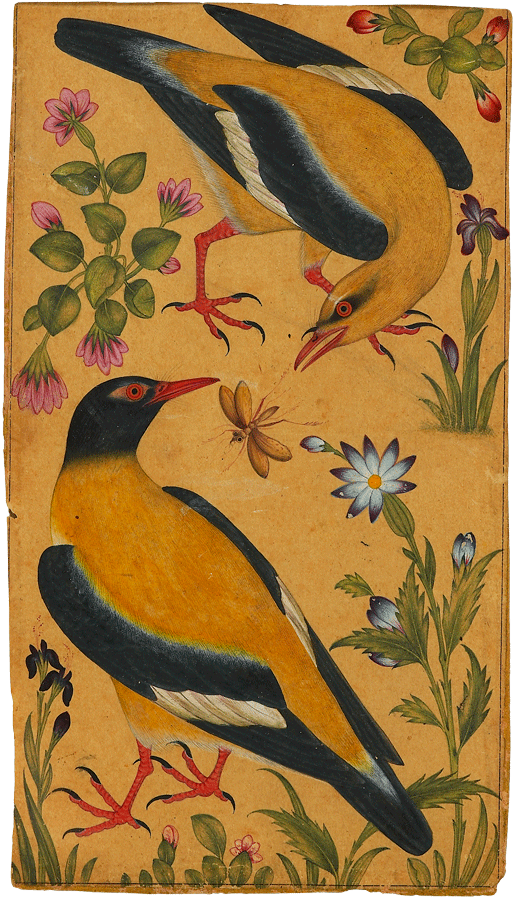
Two orioles, ca 1610, Source: Yousef Jameel Online Centre, Ashmolean
Two BirdsTwo birds. twin images
in plumage,
friends. ever inseparable,
cling to a tree.
One eats the fruit,
eats of the sweet and eats
of the bitter,
while the other watches.
watches without eating.
Buried in the bole
of the self-same tree
one suffers. engulfed
in his impotence.
Yet as he watches the watching
bird, the adorable one, and sees
the sweet bitter glory
as His alone,
He rises, free
from grief.
Translation by A. K. Ramanujan