
The Entirety of Human Experience in Brisk, Wakeful Lines: Agyeya’s Poetry
Agyeya's terse and measured words encapsulate oceans of meaning, illuminating our fears, desires, and hypocrisies.
To know and appreciate a piece of art, do we need to know the inner and outer workings of an artist? Does an artist’s reputation necessarily precede their work or colour our understanding of it? These are questions that came to mind when we chanced upon Agyeya’s poetry. Without knowing anything about his life, we were deeply affected by his terse and measured words which encapsulate oceans of meaning.
For instance, in just a few lines he captures the undulations of life and the inevitable calm that descends as we learn to live and start over.
ud gayi chidiya,
kaanpi, fir
thir
ho gayi patti
//
the bird flew away
A tremble, then
Still
Was the leaf.
Or, the celebration of an insignificant day in the calendar which marks our birthday.
ek din
aur dino sa
aayu ka ek baras le chala gaya
//
One day
Like other days
Took away a year of my life.
Or, the inability to divorce our lived experience from the stronghold of our past and future.
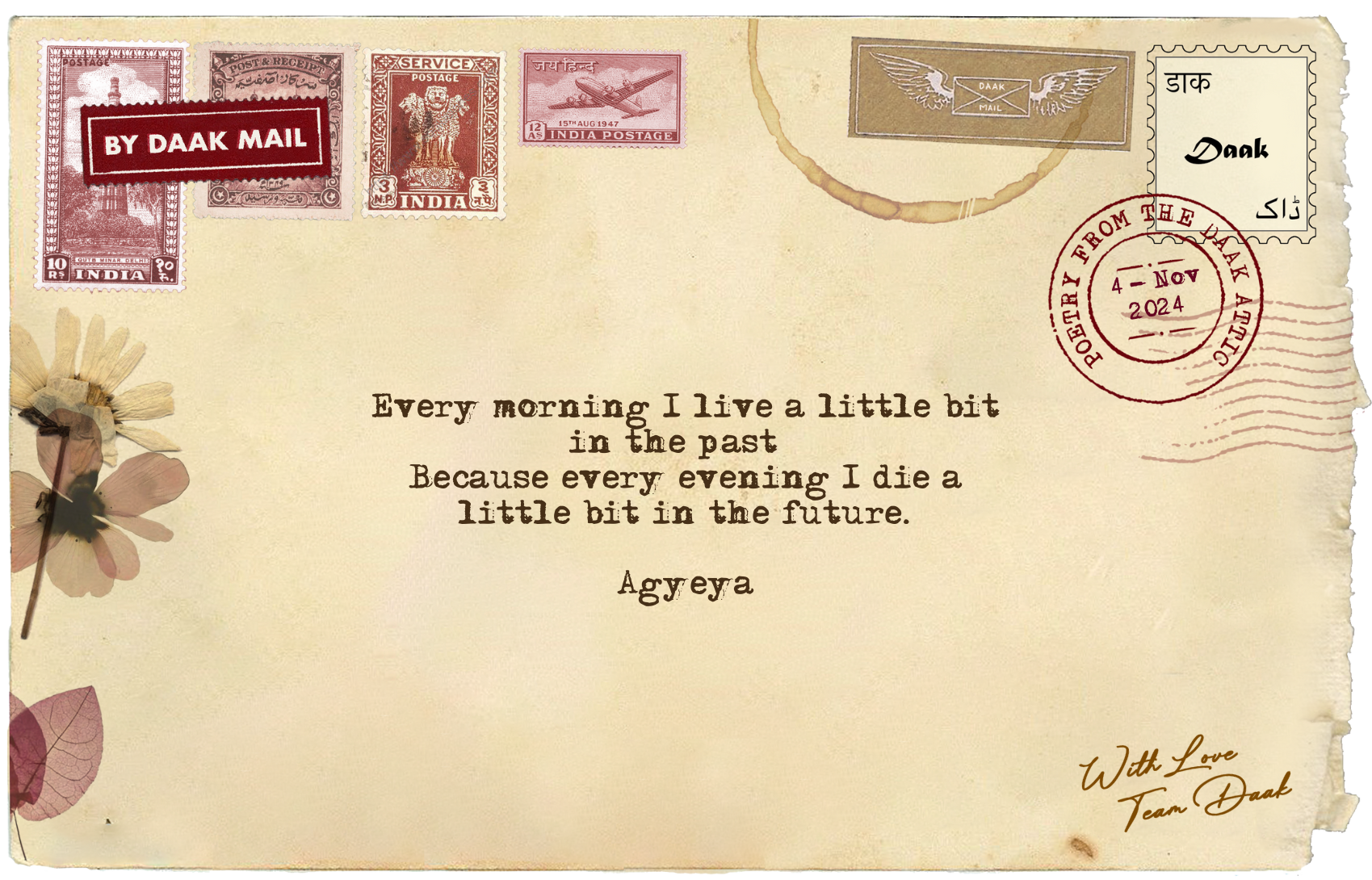
roz savere main thoda sa ateet me jee leta hoon –
kyun ki roz shaam ko main thoda sa bhavishya me mar jaata hoon
//
Every morning I live a little bit in the past –
Because every evening I die a little bit in the future.
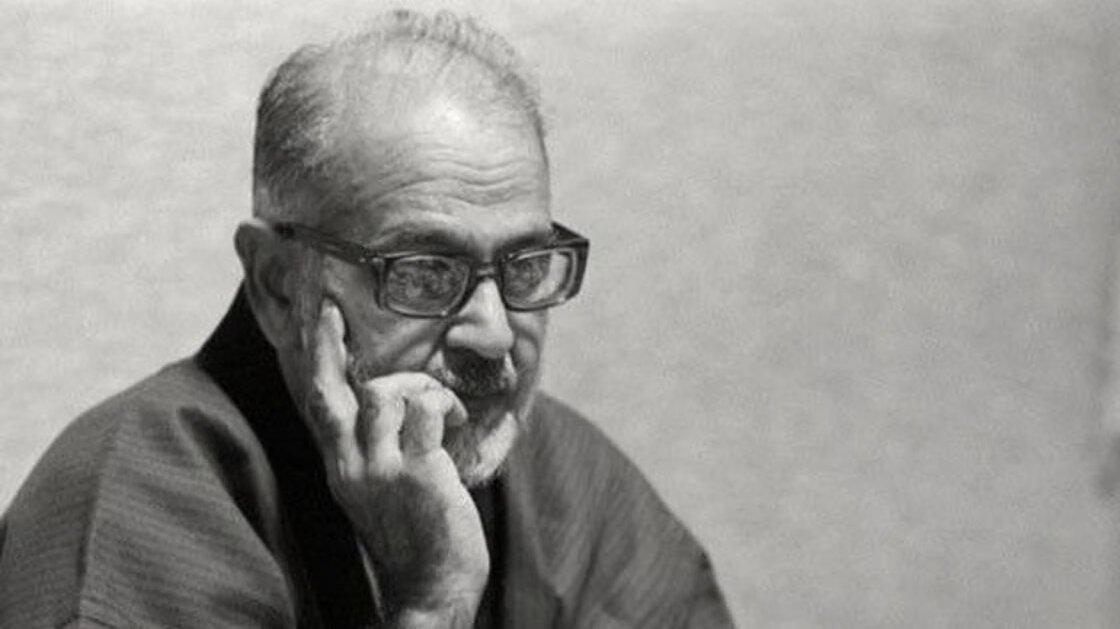
Agyeya, Source: Unknown
Agyeya was the nom de plume of Sachchidananda Hirananda Vatsyayana. He was born in 1911 in Kushinagar, Uttar Pradesh, a place of deep significance for it is here that Buddha breathed his last. Agyeya (which translates to “the unknowable”) lived many lives: a freedom fighter who fought alongside Bhagat Singh and Chandrashekhar Azad; a novelist who wrote his first work under imprisonment; the founder-editor of a news weekly; a soldier who fought in World War II; and perhaps his most beloved role — a professor at Berkeley, Heidelberg University, and University of Jodhpur, Rajasthan.
All of these experiences perhaps led him to questions and observations which were articulated in his poetry. It is impossible to confine his work to any particular genre or style. From the search of meaning to vice and death, his poetry touches upon the entirety of human experience in brisk, wakeful lines.
In the poem “Jo Pul Banayenge” (Those Who Build the Bridge), he inverts the mythological story of Lord Ram taking the help of Hanuman (who was part human and part monkey) to build a bridge that would take him to the villain, Ravan. While Ram ultimately kills Ravan and attains immortality, what happens to the people who built the bridge for Ram to achieve this great feat?
Jo Pul Banayenge Agyeyajo pul banayenge
ve anivaariyat
peeche reh jayenge.
senayein ho jayengi paar
maare jayenge Ravan
jayi honge Ram,
jo nirmata rahe
itihaas me
bandar kehlayenge.
Those Who Build the Bridge AgyeyaThose who build the bridge
Will inevitably
Get left behind.
Armies will cross over
Ravan will get killed
Ram will be victorious
Those who were the creators
In history
Will be called monkeys.
Another one of his poems, “Saanp” (Snake) makes us question the assumption that danger and vice lie in wilderness, and not in civilization.
Saanp Agyeyasaanp!
tum sabhya toh hue nahi
nagar me basna
bhi tumne nahi aaya
ek baat poochoon – uttar doge?
tab kaise seekha dasna –
vish kahan paaya?
Snake AgyeyaSnake!
You couldn’t become civilized
You couldn’t even learn how to
Settle down in a city.
Can I ask you something – will you answer?
Then how did you learn to sting?
Where did you get your poison?
And the humourous lament of a man who craves stillness in a life full of frenetic activity.
allah re allah
hota na manushya main, hota karamkalla
rookhe karam jeevan se ulajhta na palla
chahta na naam kuch, maangta na daam kuch
karta na kaam kuch, baith-ta nithalla
allah re allah
//
Oh Allah
I wish I were not human, but a cabbage
I would not get embroiled in this dry work life
I would not crave fame, nor ask for money
I would not do any work but sit idle
Oh Allah!
(Translations by Daak Vaak)
Find a collection of Agyeya’s poetry.