
Destiny, Fate and the Power of Man: Iqbal’s Conception of Our Ideal Self
Poetry laden with philosophy of khudi, which examines the self in comparison to the creator, marking the beginning of a truly spiritual journey.
Allama Iqbal — poet, philosopher, theologian, and politician — is often seen as having inspired the Pakistan movement. There, he is a revered figure for being the architect of the dream of a nation. In India, his memory is alive every time we sing the national song “saare jahaan se achha” that he penned down many years ago. While most of his early work is in Farsi, Allama Iqbal is also a stalwart of Urdu poetry, truly a Shair-e-Mashriq (poet of the East).
Iqbal’s poetry is laden with philosophy and his most famous contribution is his discussion of khudi or the self. The philosophy of khudi leaves man pondering over the understanding and realisation of his own self in comparison to the creator, marking the beginning of a truly spiritual journey. Here, we pick out some of the most beautiful Urdu couplets that give you a taste of Iqbal’s khudi. Difficult to describe in one word, the synonyms we can use for it range from ego and selfhood to self, but none of them quite capture the essence of the word. At its core, khudi begins with knowing God, knowing oneself and knowing the universe.
tilismi bood wa adm, naam hai jiska adam
khuda ka raaz hai, nahi qadir is par sukhan
//
The talisman wrought from mud and clay, whom we give the name of man, is a mystery known to God Alone, its essence true we cannot scan.
Iqbal beautifully mixes the mysticism of destiny and God with the power of human agency, asserting that humans have the power to shape their own lives. He urges each of us to elevate our bond with God such that He, himself bows to our true desires.
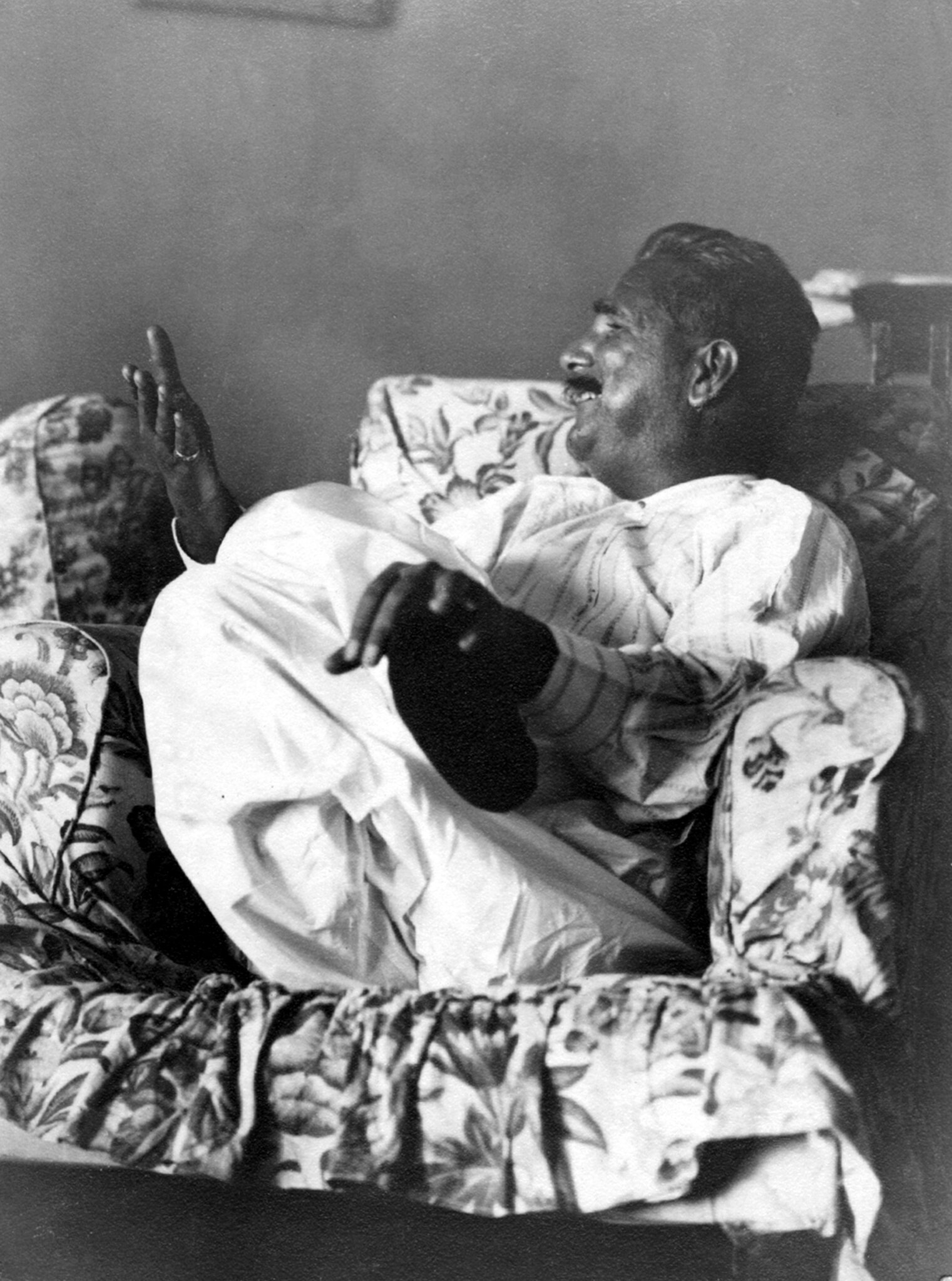
Allama Iqbal, Source: allamaiqbal.com
khird-mandon se kya puchhun ke meri ibtida kya hai
ke main is fikr mein rehta hun, meri intiha kya hai
//
What should I ask the sages about my origin:
I am always wanting to know my goal.—
khudi ko kar buland itna ke har taqdeer se pehle
khuda bande se khud puchhe, bata teri raza kya hai
//
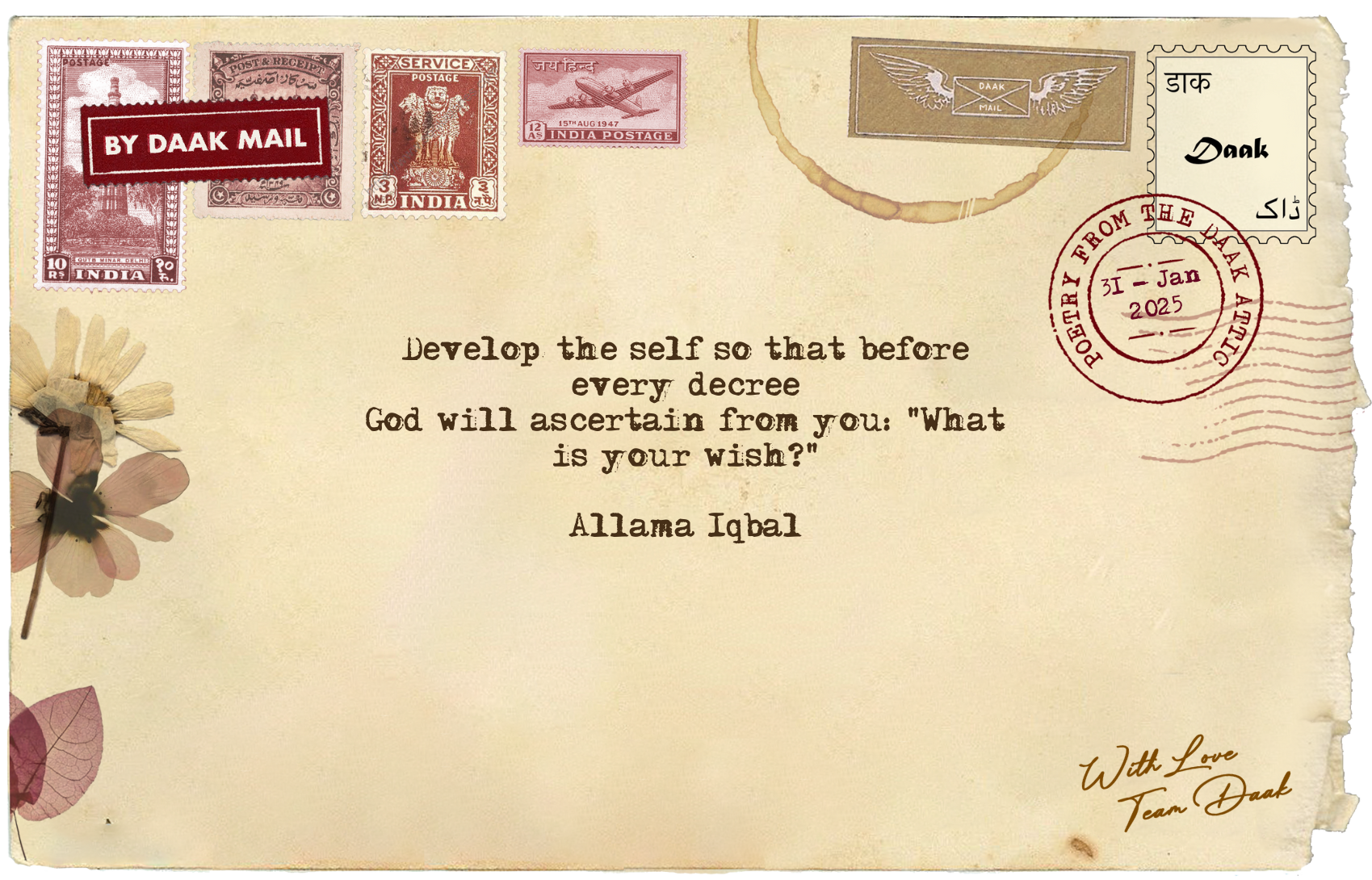
Develop the self so that before every decree
God will ascertain from you: “What is your wish?”
His call to understanding oneself can speak to each one of us:
apne mann main doob kar paja surag-e-zindagi
tu agar mera nhi banta, na ban apna toh ban
//
Delve into your soul and there seek our life’s buried tracks.
Will you not be mine? Then be not mine, be your own right
Read more in his Urdu collection, Bang-e-Dara.