
A Story of Two Indias: Raj Kapoor’s Movie, Awaara
A fantastical story of pride, revenge, love and vindication, showing the issues facing a newly independent India.
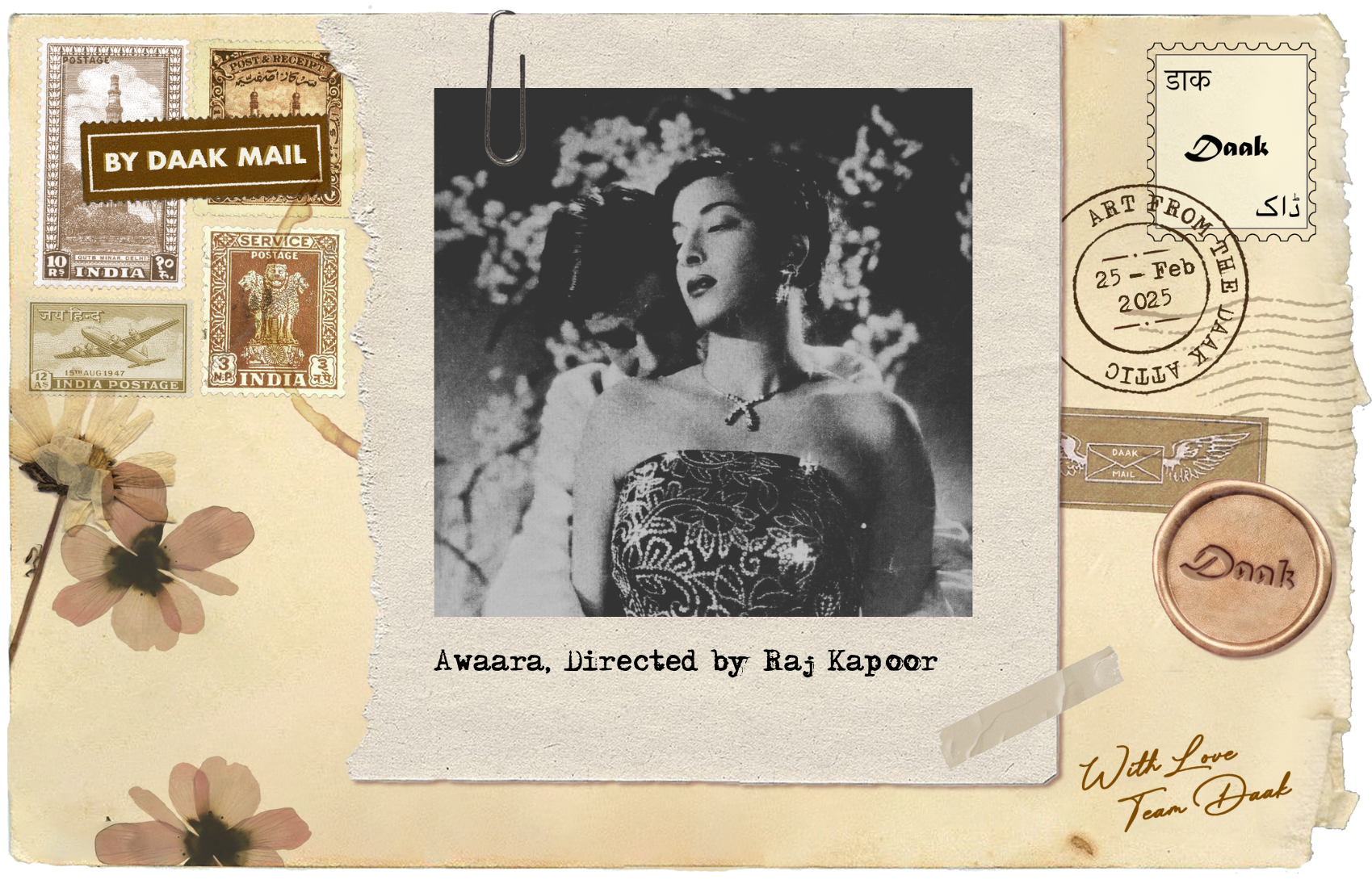
It is unfathomable that Raj Kapoor’s landmark film, Awaara (The Vagabond), was released more than seventy years ago! The divide between modernity and tradition, liberality and prejudice, and privilege and deprivation, was as evident in a newly independent India as it is today. Kapoor managed to capture these conflicting themes in a fantastical story of pride, revenge, love and vindication. In the book, Raj Kapoor: The One and Only Showman, Kapoor says, “Awaara had everything. It had the theme of class distinction. It had the greatest juvenile romantic story wrapped up in the poverty that the post-Independence era had inherited. It bloomed like a lotus in the mud and it went to people as something they had never seen before.” It is no wonder that the movie not only became a roaring success within the country, but also across the borders in the Soviet Union, East Asia, Africa, the Middle East, and Eastern Europe. It was even nominated for the Grand Prize at the Cannes Film Festival in 1953.
The convoluted story begins with a proud judge who banishes his pregnant wife, fearing the loss of his reputation, after she is kidnapped by a dacoit named Jagga. Jagga has his own vendetta against the judge who had earlier found him guilty on the simple premise that,
Ek daku ka beta daku hi ho sakta hai.
//
A dacoit’s son can only be a dacoit.
Forever tainted by the judge’s unfair pronouncement, Jagga has no choice but to follow in his father’s footsteps and resort to a life of crime. In his bitterness, he resolves to lead the judge’s son astray and exact his revenge. Thus, the judge’s exiled son, Raj, who has no idea about his father or Jagga’s evil plan, is transformed from an innocent and lovable boy to a lying and manipulative thief. In an unsurprising turn of events, the father and son have a final face-off in the court of law, where it becomes evident that legality and morality don’t always coincide.
To add to the drama, Raj is reunited with his childhood sweetheart Rita, who defends him in court against his father and her own legal guardian. The only female lawyer in the court, Rita’s portrayal is a powerful commentary on women’s place in a society in flux, especially when one contrast’s her with Raj’s mother, who is helpless in the face of her husband’s unjust act.
The movie delivers a powerful social message about many other issues plaguing society, the main one being our own prejudice and perceptions of the other. In a moving scene, Raj observes that people who commit crimes but maintain a respectable appearance are thought of as civilised, while those who work hard and dress poorly are often deemed criminals, a chilling lesson that rings true even today.
Watch the full movie, The Vagabond.
The film series is part of our collaboration with MUBI to bring you independent and historic cinema.