
A Devotional Qawwali: Amir Khusrau’s Man Kunto Maula
A song sung in praise of Imam Ali, this qawwali is sung in both Sunni and Shia gatherings and revolves around a saying of the Prophet Muhammad.
Bollywood has recently been on a mission to make qawwali, a form of Sufi devotional music, trendy. This genre, however, is said to have been created over 700 years ago as a fusion between Persian, Arabic, Turkish and Indian musical traditions. The magician who brought it to life was none other than the mystic, poet, musician, scholar and saint, Hazrat Amir Khusrau. His genius outstrips disciplines and his contribution to the sub-continent’s culture and literary heritage stands tall as an outstanding body of work.
Originally performed at Sufi shrines as devotional music, qawwali gained widespread popularity in the later part of the 20th century with artists like Nusrat Fateh Ali Khan taking it to the world music stage. However, the genre has enjoyed steady popularity across the northern parts of the subcontinent, and other regions like Hyderabad and Bangladesh. While the most popular ones we hear are in Hindi, Urdu or Punjabi, we often find ourselves humming tunes in Farsi as well. Depending on the content, qawwali can be classified into different categories.
Manqabat, a song sung in praise of Imam Ali, is a type of qawwali sung in both Sunni and Shia gatherings and is one of Khusrau’s most famous. It revolves around one sentence – a saying of the Prophet Muhammad:
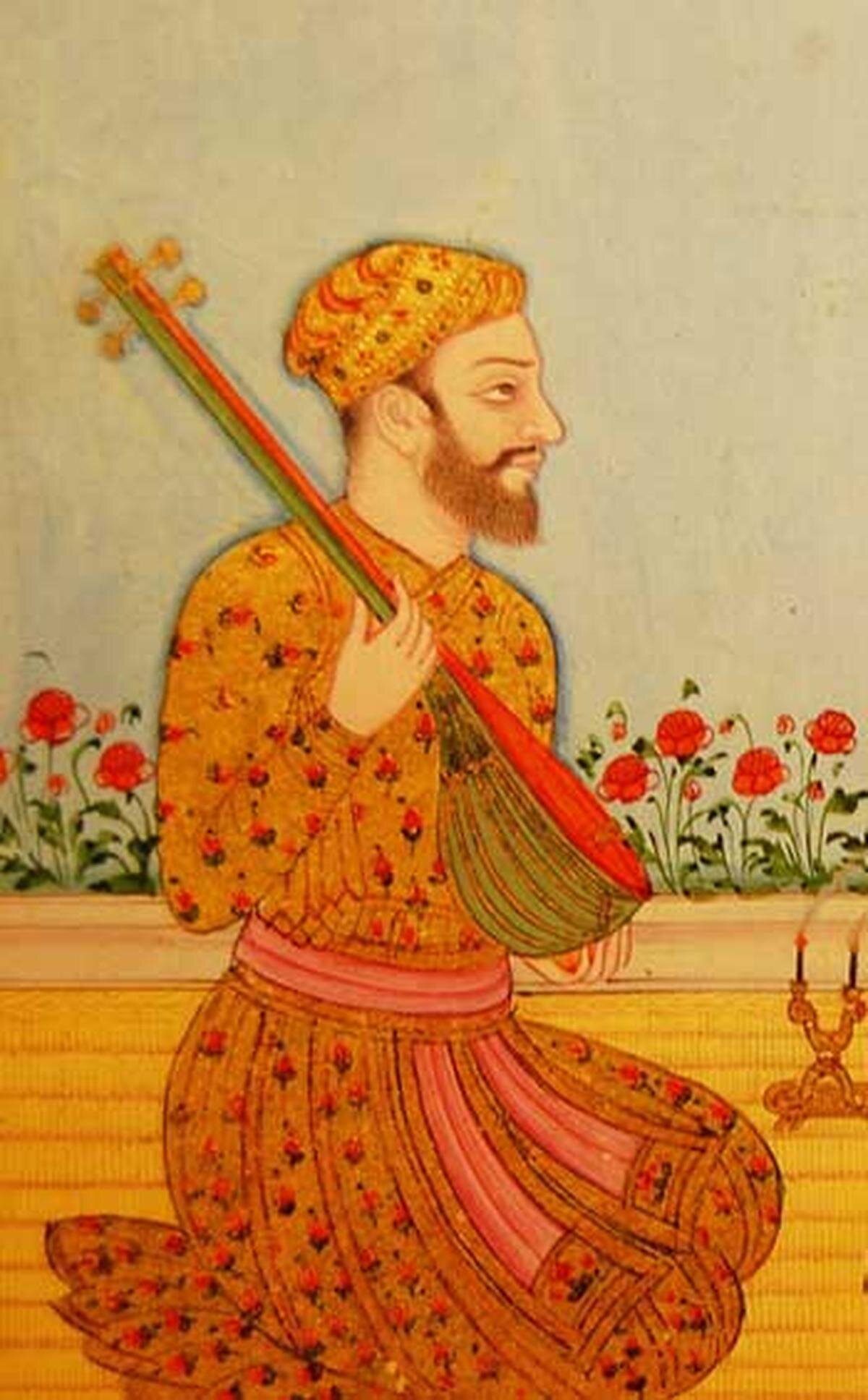
Amir Khusrau, Source: The Hindu
man kunto Maula,
fa Ali-un Maula
//
Whoever accepts me as a master,
Ali is his master too.
While Imam Ali, cousin and son-in-law of the Prophet, is revered across sects of Islam, the deviance in Shia and Sunni thought is around his immediate succession to the Prophet; hearing this qawwali sung in both Sunni and Shia gatherings is, therefore, a rare moment of unison.
This line was set to music by Khusrau, who added to it a famous melody called a tarana, also his creation.
dara dil‑e dara dil‑e dar‑e daani,
hum tum tanana nana,
nana nana ray,
yalali yalali yala,
yala yala ray
This verse is sung in repetition accompanied by music that gives it the feeling of a hymn with the rhythm of chants. This, combined with a maddening devotion of the verse to Ali, makes it a spiritual, meditative experience.
shaah-e-mardaan
sher-e-Yazdaan
quwwat-e-Parvardigaar
laa Fatah Illaa Ali
laa saif illaa Zulfiqaar
//
King of the brave,
Lion of God,
Strength of God.
There is no one like Ali [and]
there is no sword like Zulfiqaar.**The sword of Ali given to him by the Prophet
—
Ali imaam-e-manasto manam Ghulaam-e-Ali
hazaar jaan-e-giraamii fidaa-e-naam-e-Ali
//
Ali is my master, I am the slave of Ali.
Thousands of lives can be sacrificed for the sacredness of the name of Ali.